Safeguarding vulnerable persons in religious organisations in Lithuania
The study examines state law and the internal rules of religious organisations concerning the protection of vulnerable persons within religious organisations.
“In short, the quality of the social and political order depends not only on the personal development of society’s members and citizens, but also on that of rulers or the governing group.”
“And a religion that is not free is worthy of neither God nor humanity.”
“Our Constitution was made only for a moral and religious People. It is wholly inadequate to the government of any other.”
“A constitution is enacted neither for decoration nor to deceive. It is the most serious of laws, the one that must guide the others.”
“Law without (what I call) religion degenerates into a mechanical legalism. Religion without (what I call) law loses its social effectiveness.”
“A right is essentially personal. It is granted not to ideas, abstractions or generalities, but to people.”
“Our civil rights have no dependence on our religious opinions any more than our opinions in physics or geometry.”
Law and Religion Research Centre · Vilnius

01About
The Law and Religion Research Centre (TRTC) conducts and collaborates on research, training, consulting and information activities in the fields of freedom of conscience and religion, Church–state relations, and the interaction between law and religion.
The Centre (Teisės ir religijos tyrimų centras) is a public institution and a nongovernmental organization with registered recipient-of-support status in Lithuania. It was registered in .
Centre detailsTo contribute to the common good by broadening, deepening and sharing knowledge of law, religion and the relationship between them. In collaboration with scholars, experts and policymakers, to contribute to monitoring and evaluating legal processes and to more effective implementation of the principles of religious freedom in Lithuania and worldwide.
A Lithuania in which everyone’s religious freedom is respected, without compromising the common good or natural law.
02Research areas
Four perspectives on the relationship between law and religion.
The freedom to believe, to change one’s beliefs or to profess no religion. Protection of individual conscience and the expression of faith in public life.
How can individual freedom be reconciled with the rights of others?
The legal status and autonomy of religious communities, their relations with state institutions, and the constitutional foundations of those relations.
What does state neutrality towards religion mean?
Human dignity as a starting point for legal and ethical debate. The relationship between individual rights and the interests of communities and society.
How is the principle of dignity reflected in legal norms?
The place of religion in education, work and the public sphere. The expression of beliefs, community participation and dialogue in a democratic society.
How can we live together with different beliefs?
The study examines state law and the internal rules of religious organisations concerning the protection of vulnerable persons within religious organisations.
“Freedom of thought, conscience, and religion shall not be restricted.”Constitution of the Republic of Lithuania · Article 26, paragraph 1 (opens in a new window)
“Human rights and freedoms shall be innate.”Constitution of the Republic of Lithuania · Article 18 (opens in a new window)
“Convictions, practised religion, or belief may not serve as a justification for a crime or failure to observe laws.”Constitution of the Republic of Lithuania · Article 27 (opens in a new window)
“The State shall recognise the churches and religious organisations that are traditional in Lithuania; other churches and religious organisations shall be recognised provided that they have support in society, and their teaching and practices are not in conflict with the law and public morals.”Constitution of the Republic of Lithuania · Article 43, paragraph 1 (opens in a new window)
“State and municipal establishments of teaching and education shall be secular. At the request of parents, they shall provide religious instruction.”Constitution of the Republic of Lithuania · Article 40, paragraph 1 (opens in a new window)
“Human rights may not be restricted; no one may be granted any privileges on the grounds of gender, race, nationality, language, origin, social status, belief, convictions, or views.”Constitution of the Republic of Lithuania · Article 29, paragraph 2 (opens in a new window)
“Human dignity shall be protected by law.”Constitution of the Republic of Lithuania · Article 21, paragraph 2 (opens in a new window)
“Parents and guardians shall, without restrictions, take care of the religious and moral education of their children and wards according to their own convictions.”Constitution of the Republic of Lithuania · Article 26, paragraph 5 (opens in a new window)
04Our work
The results of this index are intended to be presented annually to the Lithuanian public. Published index data will be available at www.religijoslaisve.lt (opens in a new window).
An educational resource developed by the Law and Religion Research Centre to help law students learn constitutional law interactively. www.konstitucineteise.lt (opens in a new window)
05Contact and details
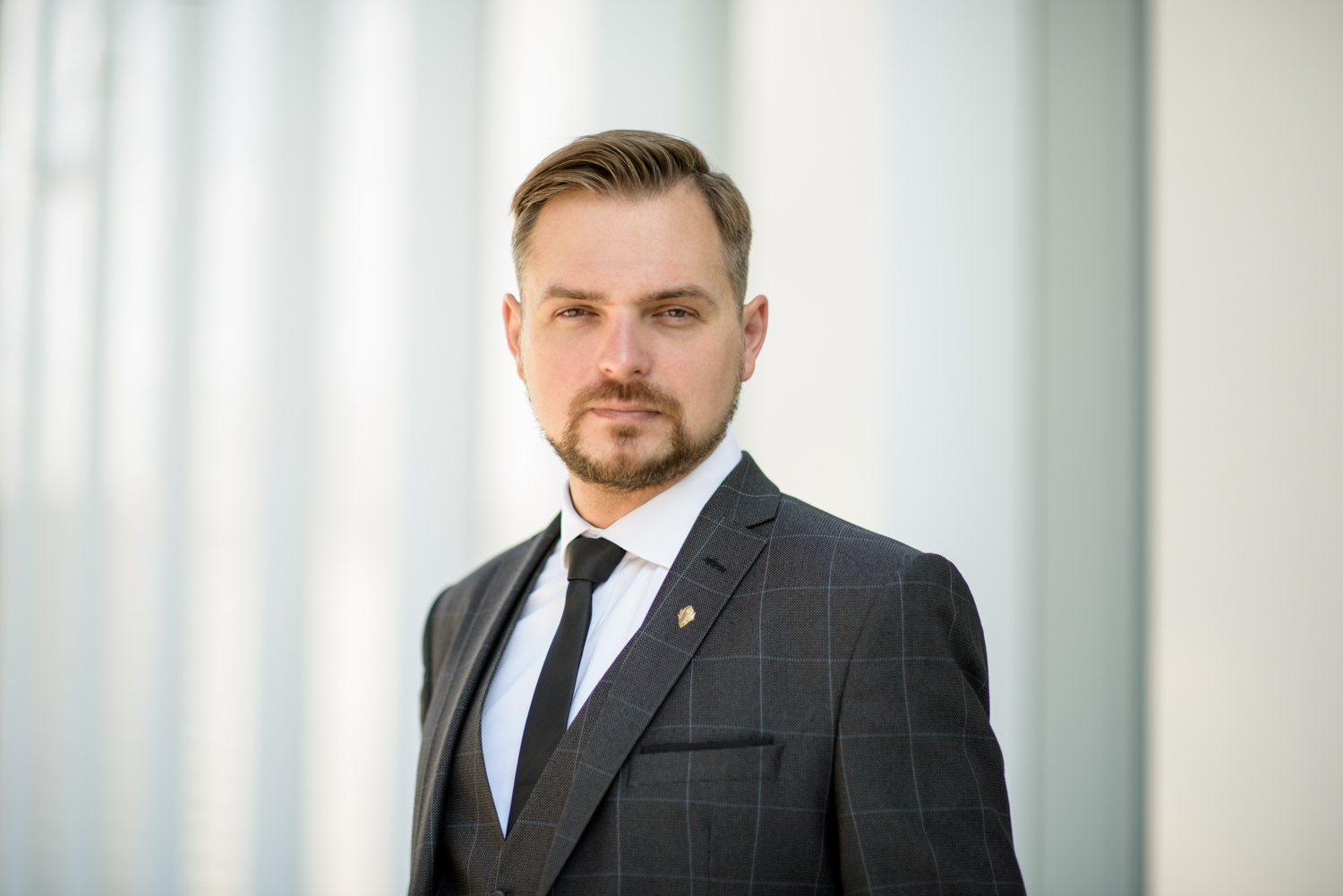
Centre Director
Would you like to contribute to the Centre’s work or ask a question?
06Support the Centre
You can support the Centre’s work by bank transfer. In the payment reference, enter “parama centro veiklai”.